
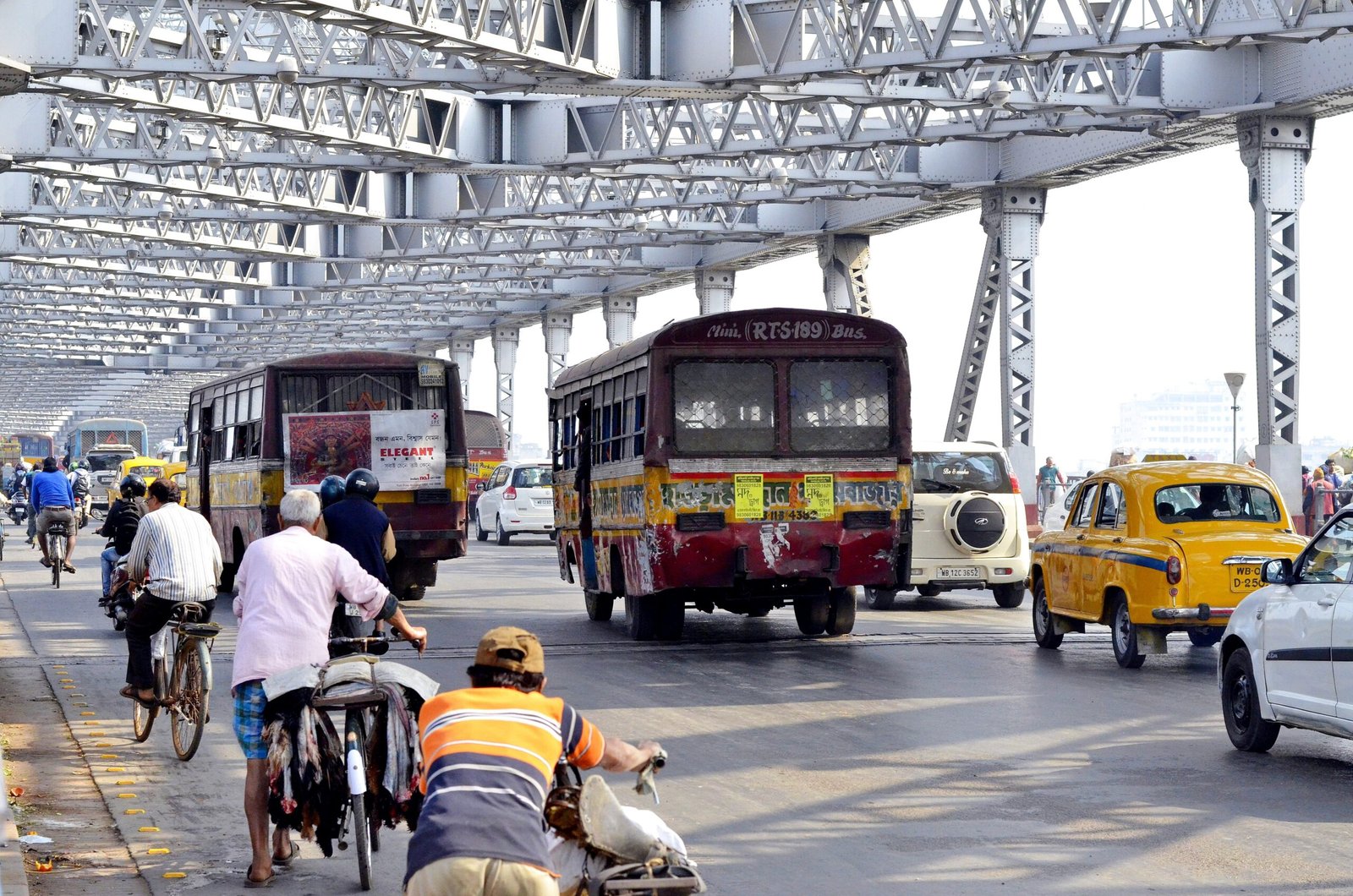
Walk through almost any Indian city, and you will encounter the same paradox: we build footpaths to help people walk safely, yet they are often so heavily occupied by street vendors, parked vehicles, shop extensions, and other encroachments that pedestrians are forced onto the road.
At the same time, the people occupying these spaces are rarely just “encroachers.” For many street vendors, the pavement is their workplace and an essential source of livelihood.
The real urban challenge is not simply to clear vendors from footpaths. It is to find a way to protect the pedestrian while creating legitimate, well-managed spaces for street vending.
The Footpath Must Serve the Pedestrian First
A basic principle of urban design should be straightforward: every person should be able to walk safely and comfortably through a city without competing with vehicles.
A continuous pedestrian corridor must be treated as essential public infrastructure—just like a road, drainage system, or public transit network. This does not mean every street must be free of vending; it means vending should be strategically planned so it does not compromise the primary function of the footpath.
Moving from Enforcement to Street Management
Indian cities have frequently relied on periodic enforcement drives. Vendors are removed, goods are confiscated, and pavements are cleared. Yet, within days or weeks, the vendors return.
The reason is obvious: enforcement alone does not solve the underlying economic and spatial reality. If a vendor depends on a specific location for foot traffic, simply moving them to an economically unviable spot will inevitably fail.
A more sustainable approach requires a combination of allocation, design, regulation, and enforcement.
The Three-Zone Approach
Every significant footpath can be strategically planned around three clearly defined areas:
- The Pedestrian Zone: A continuous, obstruction-free corridor reserved strictly for walking. This is the highest priority and must remain accessible to everyone, including senior citizens, children, and persons with disabilities.
- The Vending Zone: Where appropriate, designated vending bays can be created alongside the pedestrian corridor. These must have defined boundaries and maximum footprints so individual stalls do not slowly bleed into the walking space.
- The Street Furniture and Services Zone: Trees, streetlights, utility boxes, benches, and signage should be consolidated into a separate zone rather than randomly placed in the path of movement.
Create Vending Districts, Not Informal Encroachments
Cities should identify locations where street vending is appropriate and create designated, well-designed micro-markets close to the demand they serve. These clusters can be located near metro stations, bus stops, residential neighborhoods, office districts, and transport interchanges.
The goal is not to push vendors to remote locations, but to integrate them properly. Proper paving, drainage, lighting, waste collection, and signage make these spaces safer and more attractive for vendors and customers alike.
Furthermore, time-sharing can be part of the solution. Not every street needs the same arrangement all day. A specific location could permit vending during morning or evening peaks while remaining a purely pedestrian space at other times, allowing cities to maximize limited public space.
Regulate the Footprint, Not Just the Vendor
A smart regulatory system should provide every authorized vendor with:
- A clearly identified location and defined maximum footprint
- An identity badge or vending permit
- Permitted operating hours
- Waste-management responsibilities
- Clear conditions for renewal and penalties for violations
This principle should apply to all forms of encroachment. A small fruit cart should not be treated the same as a restaurant placing dozens of tables on a footpath, a retailer displaying merchandise outside, or vehicles illegally parking in pedestrian space. Good governance requires distinguishing between different uses and regulating them accordingly.
Smart Enforcement Through Digital Twinning
Technology allows us to completely rethink how we manage our streets. Cities increasingly have access to GIS mapping, digital property records, CCTV, and mobile applications.
By leveraging these tools for strategic planning, we can effectively create a digital twin of our street infrastructure. Every authorized vending location can be mapped and linked to a vendor ID, with physical boundaries digitally recorded.
This shifts enforcement from an occasional, chaotic exercise into a continuous, data-driven management system. The administrative question is no longer, “Is this vendor allowed to be here?” It becomes the much simpler, “Is this vendor within the specific spatial footprint legally allocated to them in the system?”
Giving Communities a Voice
Street management is ultimately local. Resident welfare associations, market groups, street vendors, pedestrians, and municipal authorities all have legitimate stakes. Ward-level management mechanisms can bring these stakeholders together to decide how individual streets should function.
The objective should be neither “vendors first” nor “vehicles first.” It must be people first.
A New Way of Thinking About Our Streets
As India’s urban populations surge, competition for public space will only intensify. We cannot solve this by treating every street vendor as a criminal, nor can we accept a reality where pedestrians lose their basic right to walk safely.
The answer lies in balance: Protect the pedestrian. Recognize the livelihood. Design the space. Regulate its use. Enforce the rules consistently.
The most practical starting point is to select one neighborhood or a single square kilometer, redesign its streets using this approach, measure the results, and scale what works.
The question for India’s cities is clear: Can we reclaim our footpaths without taking away people’s livelihoods? With the right strategic planning, the answer is undoubtedly yes.